National Residential Retrofit Plan 2026 Will Make Home Energy Upgrades More Affordable and Accessible
Jan 27, 2026
Cork North West Fine Gael TD John Paul O’Shea has welcomed the announcement of a comprehensive package of new and enhanced home energy grants under the National Residential Retrofit Plan 2026, describing it as a major step forward in making warmer, more comfortable, and cheaper-to-heat homes a reality for homeowners across the country.
The new plan, administered by SEAI, significantly expands supports for homeowners, first-time buyers, social housing providers and vulnerable households, ensuring that energy upgrades are more affordable and accessible than ever before.
Key measures under the National Residential Retrofit Plan include:
-
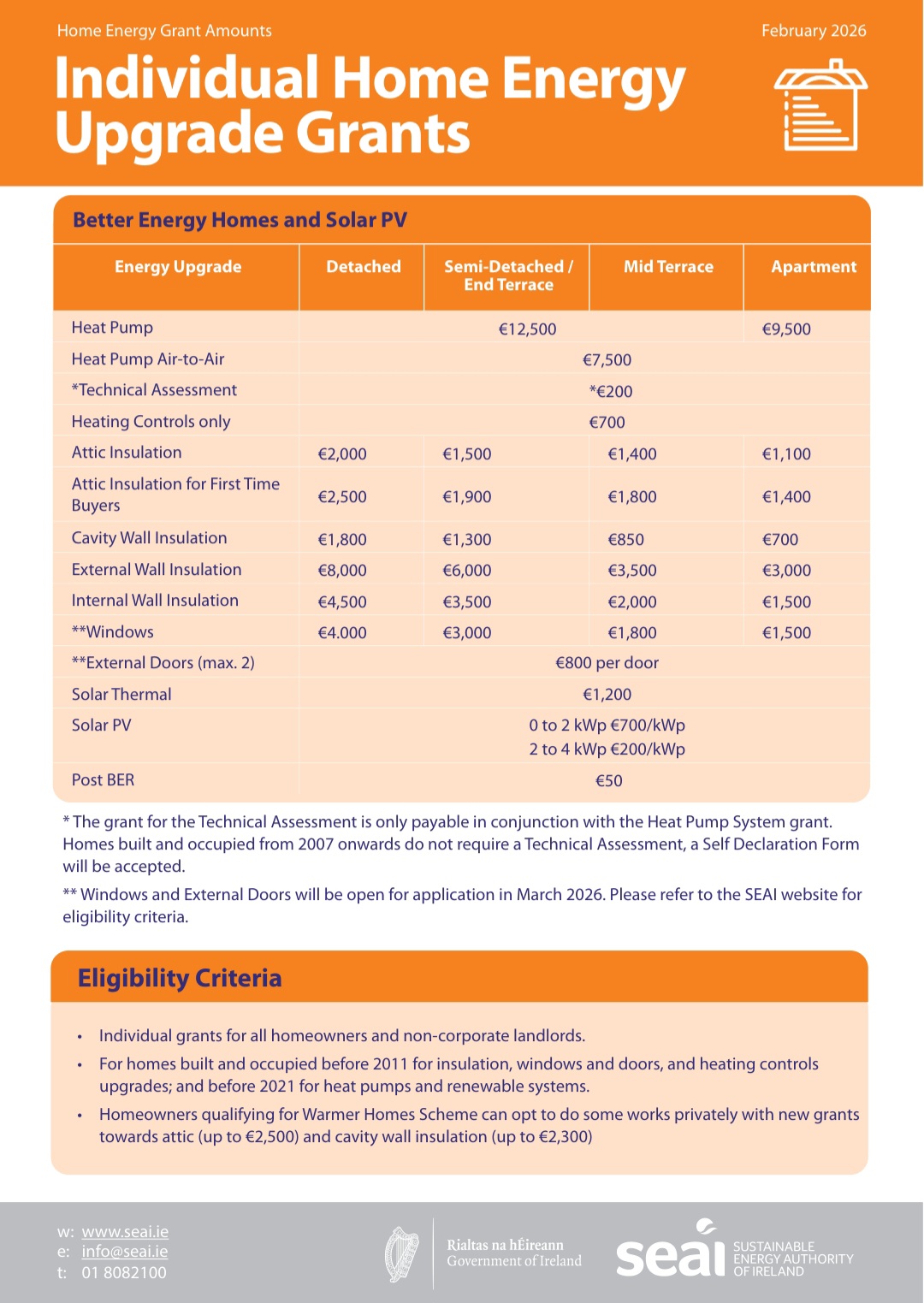
New and enhanced individual upgrade grants, including a new windows and doors grant
-
Higher grant rates and wider eligibility, allowing homeowners to complete deep retrofits on a phased basis that suits their budgets
-
Increased supports for homeowners on qualifying welfare payments
-
New grant supports for First-Time Buyers of existing homes
-
Enhanced funding for Approved Housing Bodies and Local Authorities, alongside targeted community supports for older people
Commenting on the announcement, John Paul O’Shea TD said “This expanded National Residential Retrofit Plan represents a real and practical response to rising energy costs and the need to improve the comfort and efficiency of our homes. By increasing grant levels and widening eligibility, the Government is ensuring that many more households can take part in the energy transition, regardless of income or stage of homeownership.”
The package was announced by the Department of Climate, Energy, and the Environment who outlined the Government’s commitment to improving energy affordability, security, and sustainability.
Deputy O’Shea added “These measures will make more homes more sustainable and energy-efficient, reducing reliance on fossil fuels and lowering energy costs for households. More than 58,000 homeowners benefited from SEAI upgrades last year alone and we want to do more this year. This is a major boost for homeowners and the retrofit sector and there has never been a better time to retrofit your home.”
New and Enhanced Supports
From 3 February 2026, increased grants will apply for:
-
Cavity wall insulation and attic insulation, reflecting rising costs
-
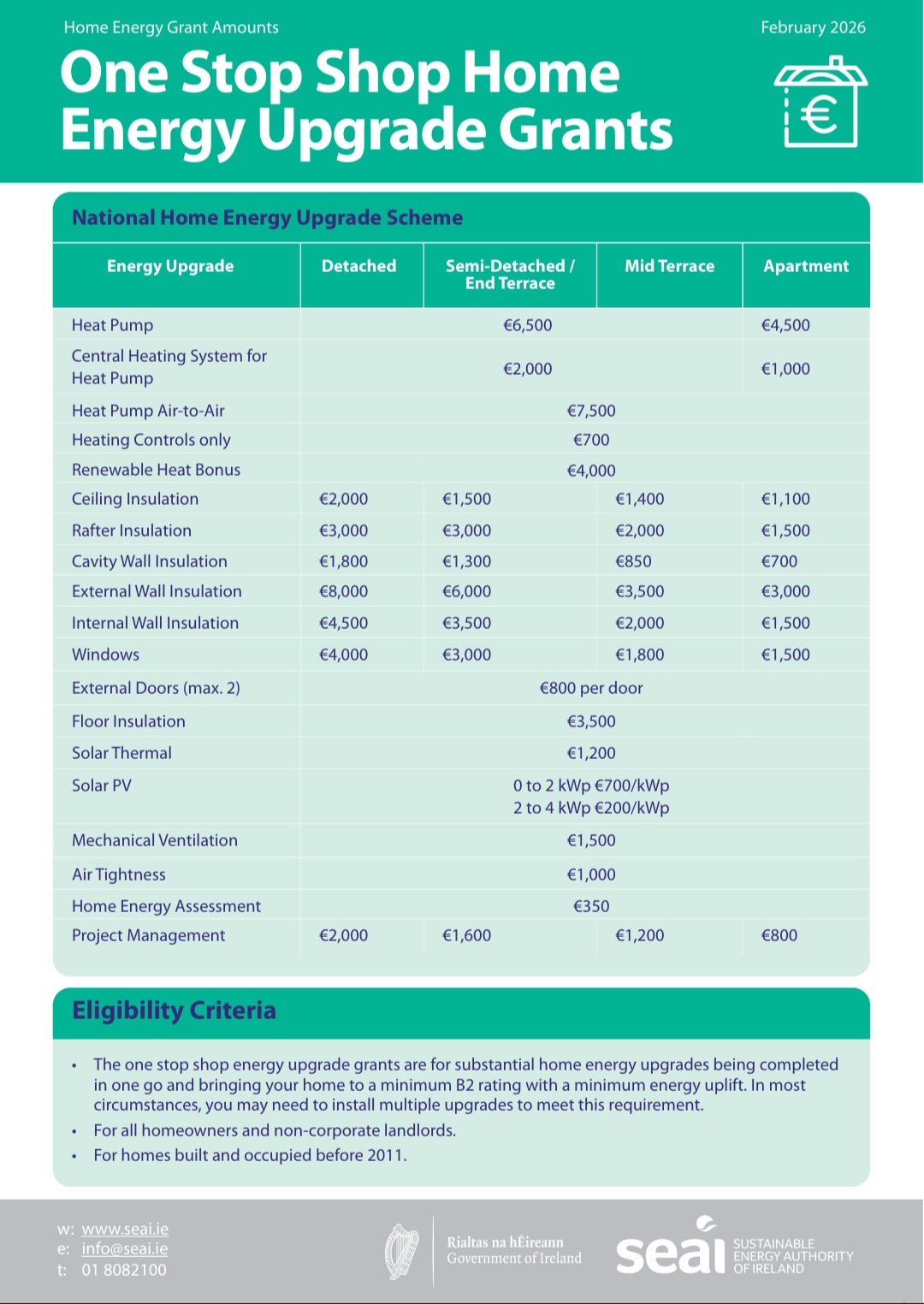
A new fixed heat pump system grants of up to €12,500, covering heat pump installation, heating system upgrades and a renewable heating bonus
-
A high-temperature heat pump pilot scheme to test emerging technology in Irish homes
From 2 March 2026, additional measures include:
-
A new windows and doors grant, linked to minimum building fabric standards
-
A higher attic insulation grant for First-Time Buyers of existing homes
-
A new ‘second wall’ grant, allowing homeowners to further upgrade wall insulation even if they have previously received support
There will also be higher fixed-rate grants for attic and cavity insulation for homeowners on qualifying welfare payments, helping to address energy poverty while not affecting eligibility for other Warmer Homes Scheme measures.
Further supports have been announced for Local Authority homes and Approved Housing Bodies, with increased grant rates of up to 75–80% of upgrade costs, rising to over 90% when combined with Energy Efficiency Obligation Scheme supports.
Deputy O’Shea concluded by saying “Whether homeowners are upgrading step-by-step or undertaking a full retrofit through the SEAI One Stop Shop, these measures will make a real difference. This is about fairness, comfort, and ensuring no household is left behind in the transition to a more energy-efficient future. Between 2019 and the end of 2025, Government investment of €1.67 billion supported energy upgrades in over 244,000 homes nationwide. The National Residential Retrofit Plan 2026 builds on this progress and significantly broadens access for the years ahead.”